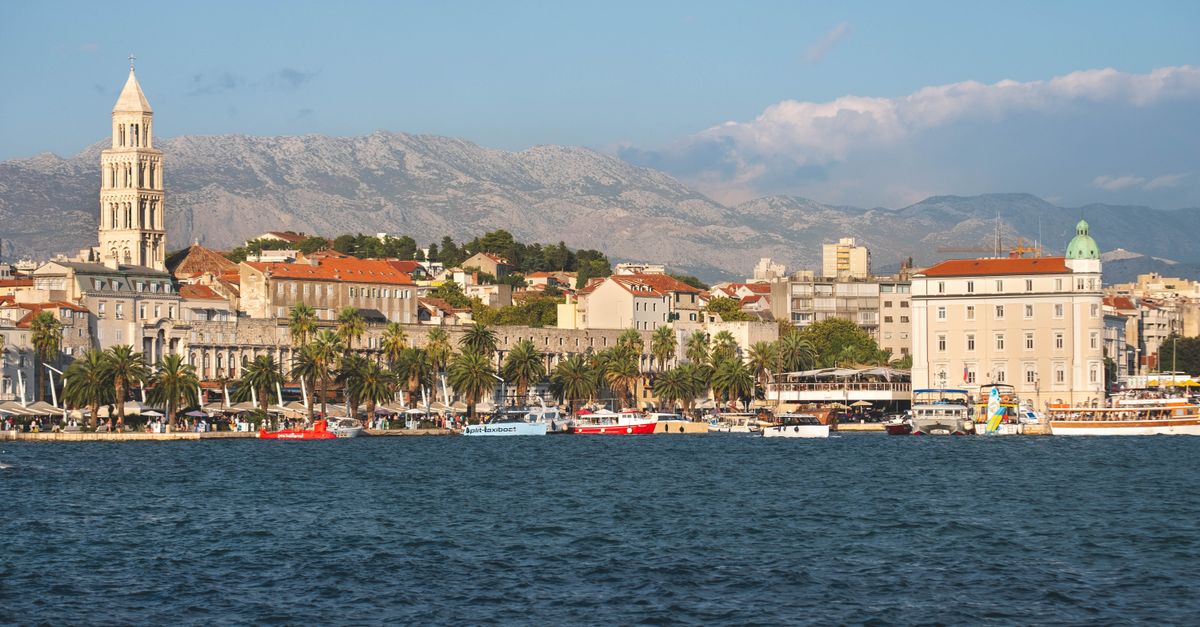
Bottom line: Split is one of the better Adriatic chess-holiday shapes because it combines sea access, compact city movement, and a week that can stay restorative instead of draining.
Why Split works so well as a chess holiday

Split needs some old-town texture
Split is more convincing as a chess holiday when the article shows not just the waterfront but the lived-in texture of stone lanes, shaded corners, and the slower atmosphere that makes the city easy to stay in.
Picturesque stone house with green shutters and potted plants in Split, Croatia's old town.
Split has a simple advantage: sea air changes the emotional quality of a tournament week. Even a short walk after a difficult round can do more here than in a fully inland city. That makes it a strong candidate for players who need fast recovery between games.
The city is also compact enough to keep daily decision-making under control.
What makes Split different

The promenade is part of the recovery loop
Split works so well partly because the seafront gives you somewhere obvious to go after rounds, without needing a complicated plan. That ease matters for the whole trip shape.
A tourist walks along the scenic waterfront promenade in Split, Croatia.
Split is less about museums and more about rhythm. Waterfront movement, easy meals, and a slower holiday cadence matter more here than big-ticket attractions. That can be exactly right for chess travel.
It is a better fit for people who want a trip to feel breathable rather than ambitious.
What to do between rounds

Split also needs civic center gravity
The article feels fuller when Split reads as more than coast and stone alleys. A bit of square-life and urban center helps the destination feel like a proper week base.
View of Prokurative Square's historic architecture in sunny Split, Croatia.
Keep it simple: one promenade walk, one long coffee, one quiet spot to reset. Save bigger excursions for non-round days. Split works because the baseline day already feels good without much effort.
Who is Split best for?
Split is best for players who want sea-led recovery, mild urban structure, and a destination that still works if the chess becomes mentally heavy. It is also strong for couples and mixed-interest trips.
Tournament week at a glance
- Event: Split Open Chess Festival (15th edition)
- Dates: The 2026 edition ran 6–14 August. The 2027 edition has not been announced.
- Venue: Hotel Zagreb, Put Duilova 23, Split
- Who can enter: Standard, Rapid and Blitz sections, all FIDE-rated. No minimum rating is listed.
- Entry fees: 2026 fees: Standard €60 (€50 for under-18s, GMs exempt), Rapid €20, Blitz €20.
- Getting there: An official shuttle and local bus 37 link the airport with the Main bus station.
- Accommodation: The organiser lists Hotel Zagreb B&B at €60–80 per person.
Rest-day ideas
- Diocletian's Palace: UNESCO-listed, among the best preserved Roman building monuments; includes the Cathedral of St Domnius in the former mausoleum.
- Marjan hill: Hill above the city with views and walking/recreation paths.
- Trogir day trip (bus 37): UNESCO-listed Romanesque-Gothic town about half an hour from Split by local bus 37.
Details checked October 2026 against organiser and official sources. Dates, fees and entry rules change each year, so confirm everything on the official event page before you book.
Official tournament verification
Before you book, verify the current official event details because dates and entry windows can change.
- Croatia federation listings on Chess-results
- Chess-results.com for the live Split and Croatia event pages relevant to your week.
- FIDE calendar and federation notices for final event confirmation.
If you want a stronger city-week frame, compare Split with Dubrovnik-style or larger Mediterranean city options. If recovery is the priority, Split is attractive.
Explore more destination guides